Interview: Phillip Ozorio – The time I designed a kitchen for Julian Clary and his dog
Wed 17th Dec 2025 by Tim Wallace

Interview: Phillip Ozorio – The time I designed a kitchen for Julian Clary and his dog

After 35 years at the helm of Connaught Kitchens, Phillip Ozorio has built a boutique London studio defined by stories, skill and a fiercely independent ethos. He talks celebrity clients, central-London challenges and why he’s predicting an upturn next year.
You can tell a lot about a kitchen designer by the clients who keep coming back. In Phillip Ozorio’s case, one of them is Julian Clary. Or more specifically, Julian Clary’s dog.
“Julian’s first flat was a sitting room, dining room and kitchen combined,” Ozorio recalls. “He wanted the same high-glaze porcelain tiles running throughout as it was easier to clean muddy paw prints.”
Clary even brought Fanny the Wonder Dog into the showroom to test out hard flooring options. “Julian’s been a customer for 30 years and I’ve done 3 kitchens for him. He now lives with his husband in a 5 storey Victorian house very near to Regents Park – ideal for dog walking,” says Ozorio.
Clary has even put a testimonial on the Connaught website. In complete contrast, so too has Cherie Blair. In fact, Ozorio casually drops notable clients into our chat at regular intervals. This year’s Marks & Spencer Christmas advert features the techno classic Rhythm Is a Dancer, he tells me, which reminds him that one of his clients back in 1992 was the song’s co-producer Luca Anzilotti. “We did 2 flats for him in Soho and the fitters used to get propositioned because they were above a strip joint.”
For an old-school designer who still prefers to map out complex spaces using pencil and paper, the stories are as much part of the job as the drawings. Other celebrity clients, he reveals, have included the likes of Bob Hoskins, Steven Berkoff and Ronnie Ancona. But beneath the humour is a business that has survived 35 years in one of the toughest retail environments in the country, and a man with a very clear sense of what keeps an independent afloat.
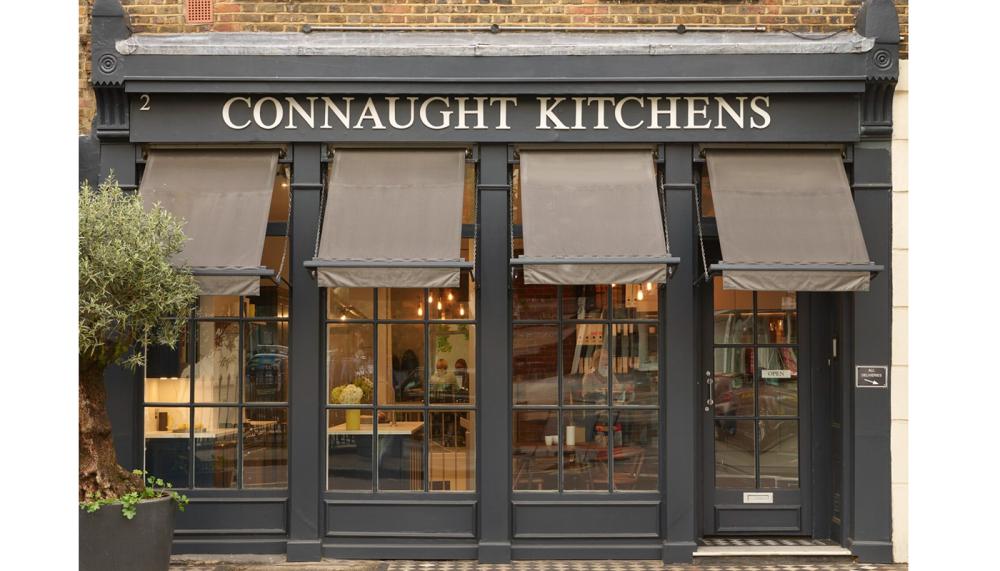
Connaught Kitchens sits at 2 Porchester Place, Connaught Village, which is roughly between Paddington and Marble Arch. It’s a prime spot but a punishing one, framed by high London business rates and dwindling footfall. “We’ve got quite a few empty shops around us,” Ozorio says. “The whole habit of the potential purchaser has changed.”
Only around 20% of his business now comes from passing trade. “People just don’t wander into the showroom like they used to,” he adds. “They research everything online before even making contact.”
The showroom itself is only 1,200sq ft, but crucially it’s solus, specialising in German furniture brand Leicht. No in-frame bespoke English cabinetry, no sprawling mix of brands.
Appliance brands are probably much as you’d expect – Miele, Siemens, Bora and Elica – but they can also source Neff, Bosch, Blanco and Fisher & Paykel if required. The company also does the occasional bathroom, largely through a deal with C.P. Hart.
“We tried expanding the furniture portfolio years ago and it just confused people,” Ozorio explains. “In a small space, too many different styles and construction methods complicate things. Being solus gives clarity, for us and the customer.”
He’s pragmatic about pricing too. London may feel expensive, but he’s aware that plenty of studios in nearby Wigmore Street are working at far higher average project values. His role is to stay competitive without crossing the line into unsustainable margins. “If you’re twice as expensive as someone down the road, that’s dangerous,” he says.
Business this year has been difficult. “We’ll break even – just,” he admits. “Last year was about the same.”
While some fixate on trying to find good news rather than face the reality of the current market, Ozorio insists he genuinely believes that next year could bring a significant upturn. Ironically, his optimism is fuelled partly by public concerns about the Labour Government, which have led many people to withdraw money from their pensions.
“There was a scare that Labour would reduce the tax-free lump sum from 25% to 10%,” he says. “A lot of people pulled their money early, myself included. That money has gone into savings accounts, ready to spend. I think we’ll see that flow back into home improvement next year. People have got money; they’ve just been reluctant to spend it.”
It is, in other words, a prediction rooted not in blind positivity but in consumer behaviour – and fear.

Although the showroom plays an important role, most of the day-to-day work happens elsewhere. Ozorio readily admits that he now works half the week from a converted garage in Ealing. All admin and finance lives there too.
The Marble Arch premises are now used almost entirely for displays and client meetings, supported by his 2 senior designers, both fully qualified in interior design. That last point really matters to him. “If I were advising anyone starting out, I’d say: hire qualified interior designers, not salespeople,” he says. “This isn’t photocopiers. It’s someone’s home. You need people who understand space, style, and proportion, not a commission sheet.”
If he were starting again today, he says he’d build a proper presentation room into the showroom: a dedicated design area with samples, a large table and space to spread out drawings. “More interior design studio, less kitchen shop.”
Connaught completes about 30 kitchens a year, with an average contract value of £40,000–£50,000. “Some projects are commercial,” Ozorio explains. “They’re small developments, pied-à-terres, but nothing like the large contract firms. We’ve deliberately kept it boutique.”
The glamour of celebrity work aside, the real challenges are pleasingly down-to-earth. “The most difficult part of the job is getting retentions paid by the client. That kind of thing can paralyse a small business,” he says. “Chasing debts eats time, energy, and your designers’ focus. It’s better to get all payments up front. Settling problems quickly and efficiently is a good recipe for keeping clients happy and getting recommendations and good reviews.”
The solution is simple but unpopular: charge for your time. Connaught has a free initial consultation, followed by a £250 site survey fee, redeemable if the client continues. A second stage requires a retainer, again redeemable, before design work progresses.
“It’s not a deposit; it’s a commitment,” Ozorio explains. “Otherwise you spend hours drawing, specifying, problem-solving, and they can just take your ideas to a contractor who’s convinced them they can do it cheaper."
While many independents fear other showrooms, Ozorio sees the real threat coming from elsewhere. “The worst competition is contractors,” he says. “They say they can supply the kitchen cheaper, but they don’t have the design expertise. It’s dangerous. People don’t understand what they’re losing until it goes wrong.”
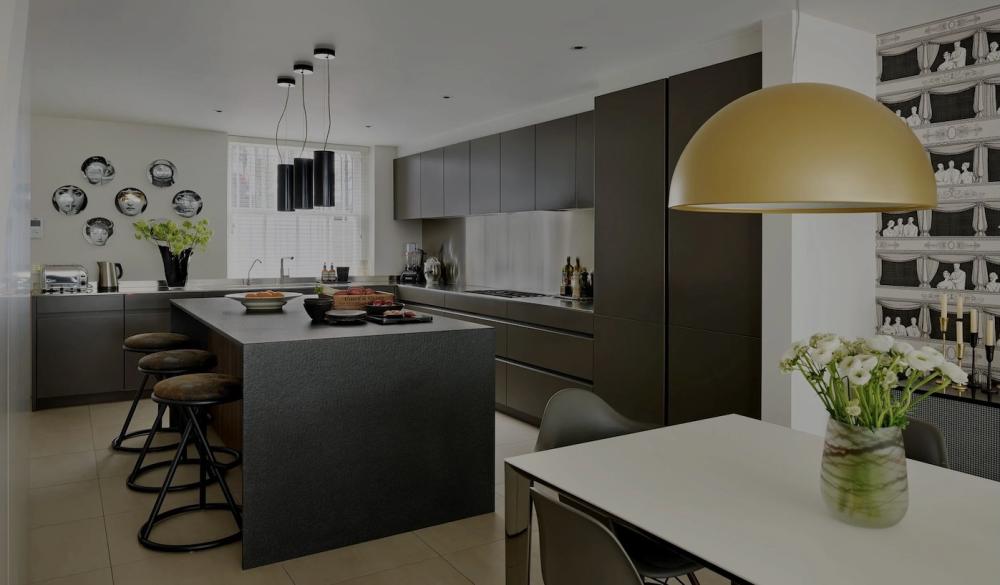
Because Connaught works with complicated central London properties – many governed by freeholders, lease restrictions, noise rules and licensing issues – the design and support element is far more involved than clients realise.
“By the time you’ve checked access routes, construction constraints, M&E, service voids, appliance ventilation, you’ve invested hours,” he explains. “If a contractor swoops in with a cheap quote at that point, something’s gone wrong.”
Despite running a tech-literate business with designers fluent in CAD, Ozorio still returns to traditional methods when a space really matters. Open-plan living, in particular, requires this spatial sensitivity. “You’re not just designing a kitchen; you’re designing how someone will move through the space, where the dining table sits, how light travels.”
He’s not anti-tech and agrees that VR and AI-assisted planning will have a place, but he believes the human eye still matters more. “Clients need a surprise,” he says. “If they can pre-visualise everything to the last millimetre, something’s lost. Trust the designer. That’s the whole point.”
Perhaps the most striking thing about Connaught Kitchens is its longevity: 35 years in business, consistent turnover, constant referrals, repeat clients. Even celebrity ones who ask him back 3 times.
“Our reputation is everything,” Ozorio says. “Whether they’re famous or just someone recommended by a neighbour, you treat them the same.”
And that, ultimately, is the thread running through his stories; beneath the jokes – the celebrity kitchen tiles selected with a housebound dog in mind, the record producers, the clients who refuse to part with their cash – there is a designer who has kept his business lean, personal and unmistakably independent.
Tags: interview, features, connaught kitchens, phillip ozorio, kitchens